
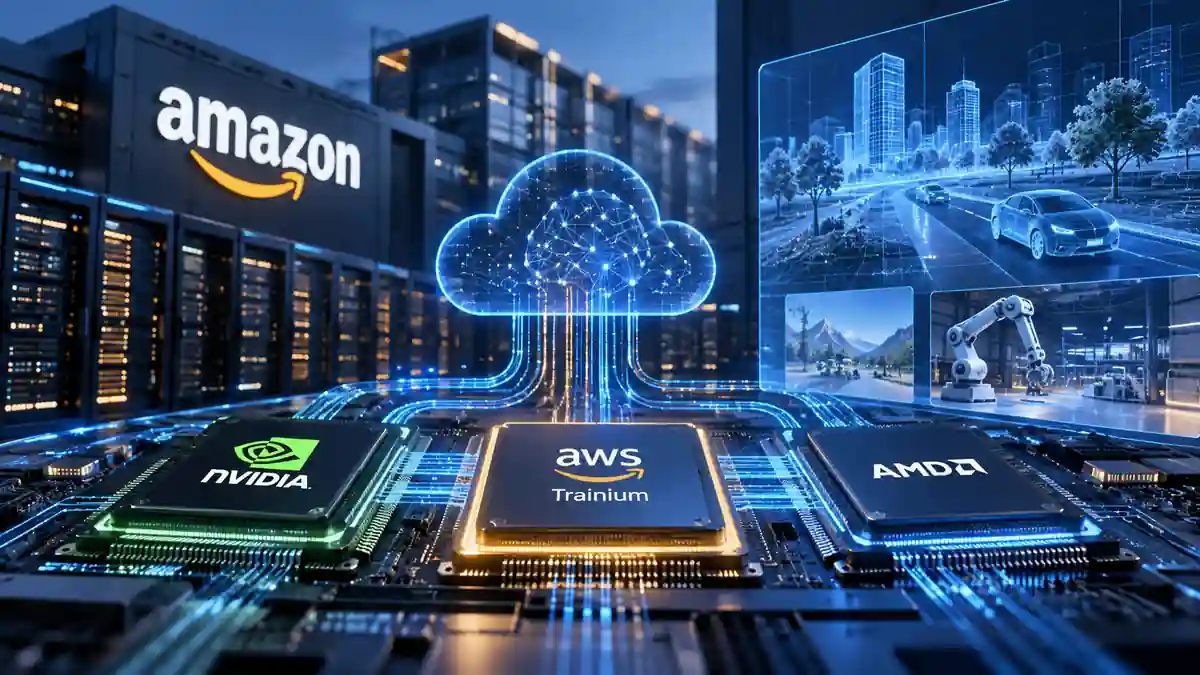
Amazon’s reported $7 billion pursuit of AI startup Decart highlights a potentially significant shift in artificial intelligence: competition is moving beyond powerful chips toward the software, efficiency and flexibility needed to run AI at scale.
Artificial intelligence has entered a phase in which computing infrastructure is becoming as strategically important as the models themselves. As businesses deploy increasingly sophisticated AI systems, the cost of running those systems, their dependence on specialized hardware and the software connecting them are emerging as major competitive factors.
Amazon’s reported negotiations to acquire AI startup Decart for approximately $7 billion illustrate this transformation.
While the proposed transaction remains unconfirmed, its potential significance extends beyond Amazon Web Services (AWS). It raises questions about Nvidia’s position in AI computing, the future of specialized semiconductors, the economics of AI services and the emerging market for systems capable of simulating the physical world.
The central issue is no longer simply who manufactures the most powerful AI chips. It is increasingly who controls the technology that makes those chips useful, efficient and accessible.
1. AI Infrastructure Competition Could Move Beyond Nvidia
Nvidia has established a powerful position in artificial intelligence through its graphics processing units and CUDA software ecosystem.
CUDA enables developers to build and optimize applications for Nvidia hardware. Its widespread adoption has created an advantage that extends beyond semiconductor performance: organizations investing in Nvidia-compatible software can face additional costs when moving workloads to alternative processors.
This is where Decart’s technology becomes strategically relevant.
The startup develops the Decart Optimization Stack, software intended to improve AI model performance across different computing architectures.
If Amazon successfully integrates these capabilities into AWS, it could make its own Trainium processors more attractive to developers seeking alternatives to Nvidia-based infrastructure.
The potential impact would not necessarily be an immediate reduction in Nvidia’s market position. Instead, it could gradually reduce the technical and financial barriers that make customers dependent on a single semiconductor ecosystem.
For AI developers, greater hardware flexibility could eventually mean more choices, stronger pricing competition and improved access to computing resources.
You may like our previous analysis on Venture Capital Is Booming Again—but AI Is Reshaping Who Gets Funded.
2. Amazon Could Strengthen the Economics of Its AI Cloud Business
Developing advanced AI models requires substantial computing resources, but the financial challenge does not end when a model is trained.
Inference—the process of running a trained model to generate responses or predictions—creates ongoing infrastructure costs.
For companies operating AI applications at scale, even modest improvements in processing efficiency can affect operating margins.
Amazon has invested heavily in its Trainium semiconductor family to provide alternatives to externally supplied AI accelerators.
Decart’s optimization technology could complement that investment by helping software operate more efficiently across different processors.
This matters because cloud providers compete on more than raw computing power. Customers also evaluate the cost of running workloads, software compatibility, reliability and the difficulty of moving between systems.
If Decart’s technology delivers measurable improvements in these areas, AWS could potentially offer more competitive AI infrastructure services.
However, those benefits would depend on technical integration, customer adoption and independently demonstrated performance improvements. A successful acquisition would not automatically translate into lower computing costs.
3. AI Startups Could Gain More Freedom to Choose Computing Infrastructure
One of the most important potential consequences of greater hardware flexibility concerns smaller AI companies.
Startups developing AI products often face difficult infrastructure decisions. They must balance computing performance against costs, availability and compatibility with their existing software.
Building applications around one semiconductor ecosystem can simplify development initially, but it may also limit future choices.
Software capable of optimizing AI workloads across different chips could reduce these constraints.
A startup might eventually be able to deploy the same model across Nvidia GPUs, Amazon Trainium processors or other supported accelerators without undertaking extensive redevelopment.
Such flexibility could help businesses negotiate infrastructure contracts, manage capacity shortages and adjust their technology strategies as new hardware becomes available.
It could also create opportunities for cloud providers and semiconductor manufacturers that have struggled to match the maturity of Nvidia’s software ecosystem.
Nevertheless, hardware portability is technically complex. Different processors have distinct architectures, memory systems and software requirements. No optimization platform can eliminate every compatibility challenge.
The broader opportunity is therefore to reduce dependence on particular hardware, rather than make all AI processors interchangeable.
4. World Models Could Expand AI Into Robotics and Physical Environments
Decart’s significance is not limited to semiconductor optimization.
The company is also developing world-model technologies, including Oasis and Lucy, that generate interactive environments and support real-time visual experiences.
World models represent an important direction in AI research because they seek to capture relationships between objects, environments and actions.
Unlike conventional language models, which primarily process and generate information, world models can support systems that simulate how environments change.
This capability has potential applications in robotics, autonomous vehicles, industrial automation and interactive entertainment.
For example, simulated environments could allow developers to test how robotic systems respond to different conditions before deploying them in physical settings.
That does not mean current world models can reliably reproduce every aspect of real-world physics. Simulation accuracy, safety and the transfer of learned behavior into physical environments remain significant technical challenges.
Still, the commercial opportunity is substantial.
As AI expands from digital assistants into systems that interact with the physical world, companies controlling simulation technology could become increasingly important participants in the AI infrastructure market.
For Amazon, expertise in world models could potentially complement its broader investments in cloud computing, automation and robotics.
5. Competition Could Intensify Across the Entire AI Technology Stack
The reported Amazon–Decart negotiations also reflect a wider strategic contest among major technology companies.
Nvidia’s position is supported by an integrated combination of hardware, software and developer tools.
Competitors are responding through custom chips, alternative software frameworks and investments in emerging AI capabilities.
Amazon has Trainium, Google has Tensor Processing Units, and AMD continues to develop AI accelerators and supporting software.
The competitive challenge is to make these alternatives practical for developers already familiar with Nvidia-based systems.
Acquiring specialized software companies offers one way to accelerate that process.
Rather than developing every capability internally, technology companies can acquire expertise in optimization, model deployment, simulation and infrastructure management.
This could lead to further consolidation across the AI sector, particularly among startups developing technologies that improve the usefulness of existing computing infrastructure.
However, consolidation also presents a potential contradiction.
While an acquisition might improve compatibility across hardware platforms, placing that technology under the control of a major cloud provider could create new forms of platform dependence.
The outcome would depend partly on whether acquired technologies remain broadly accessible or become increasingly integrated with proprietary services.
6. AI Infrastructure Startups May Become More Valuable Acquisition Targets
Decart’s reported $7 billion acquisition price illustrates the strategic value that large technology companies may place on infrastructure software.
AI investment has often attracted attention through foundation models, consumer applications and increasingly expensive semiconductor systems.
Yet the ability to improve computing efficiency may be equally important to the industry’s long-term economics.
Startups developing inference optimization, hardware abstraction, model compression, workload scheduling and simulation technologies could attract greater interest from cloud providers and semiconductor manufacturers.
Their value may come less from the number of end users they serve and more from their ability to improve the performance or economics of infrastructure used by thousands of businesses.
This distinction is important for founders and investors.
A company solving a specialized technical problem can become strategically valuable if its technology addresses a major constraint facing a much larger market.
At the same time, a high reported acquisition valuation should not be confused with proven profitability or commercial success.
Decart’s potential purchase price reflects reported negotiations, and the company’s long-term financial performance has not been publicly established.
7. The Bigger Question: Will AI Become More Open or More Concentrated?
Perhaps the most important implication of Amazon’s reported interest in Decart concerns the future structure of the AI industry.
Today, developing and deploying advanced AI often requires access to expensive computing infrastructure and specialized software expertise.
If optimization technologies make different processors easier to use, they could reduce some of these barriers.
That could benefit startups, enterprise customers and smaller cloud providers by increasing the number of viable infrastructure choices.
But the opposite outcome is also possible.
If a small number of technology companies acquire the most important optimization and simulation platforms, control over AI infrastructure could become more concentrated even as individual systems become more technically flexible.
This creates a distinction between hardware interoperability and market openness.
A technology can support multiple chip architectures while still being commercially controlled by a single platform provider.
For businesses evaluating AI infrastructure, the relevant questions will therefore extend beyond computing performance to include portability, contractual flexibility, data control and long-term switching costs.
What Amazon’s Decart Pursuit Means for the Future of AI
Amazon’s reported acquisition discussions with Decart highlight a broader transition in artificial intelligence.
The first major phase of the current AI investment cycle emphasized building increasingly capable models and securing enough computing power to train them.
The next phase is likely to place greater emphasis on efficiency, deployment economics, hardware flexibility and the ability to extend AI into physical environments.
Decart operates at the intersection of these developments.
Its optimization software addresses the practical challenge of running AI across different computing systems, while its world-model research explores applications beyond conventional text and image generation.
For Amazon, acquiring those capabilities could strengthen its position in cloud computing and support its custom semiconductor strategy.
For Nvidia and competing chipmakers, the implications concern the growing importance of software ecosystems alongside hardware performance.
For startups and enterprise customers, the potential benefit is greater flexibility in how AI systems are developed and deployed.
The larger lesson is that the next stage of AI competition may be determined not only by who builds the fastest chips, but by who makes computing infrastructure more efficient, adaptable and economically sustainable.
Whether Amazon acquires Decart or not, that competitive shift is likely to remain important.
Related Stories
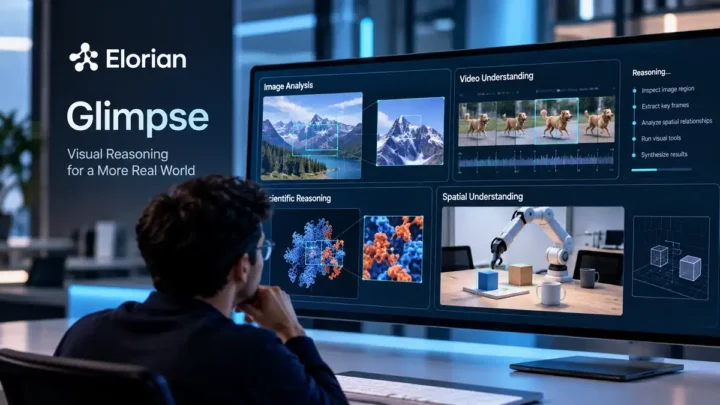
Elorian Unveils Glimpse After Raising $55 Million for Visual AI Development

Intero Biosystems Wins TechCrunch Disrupt 2026 Startup Battlefield and $100,000 Prize

Dublin International AI Summit 2026 Hosts Global Leaders to Address AI Innovation, Safety and Regulation