The fifth Baku ID innovation festival brought founders, investors, technology executives and policymakers to Azerbaijan, with 4sell.ai winning the Startup World Cup regional final and startups recognized across the NEXUS Awards.
Baku ID 2026 concluded in Azerbaijan after two days of startup competitions, investor discussions and technology-focused programming aimed at strengthening connections between innovation ecosystems across the Caucasus, Central Asia and the Middle East.
Held September 17–18 at the SABAH. City innovation campus in Baku, the fifth edition brought together founders, investors, business leaders and government representatives. Its program included the Azerbaijan Regional Final of the Startup World Cup, the NEXUS Awards and discussions spanning artificial intelligence, energy technology, digital transformation, education and startup expansion.
4sell.ai Wins Startup World Cup Azerbaijan Regional Final
One of the festival’s main startup events was the Azerbaijan Regional Final of the Startup World Cup, the international competition created by Pegasus Tech Ventures.
The competition attracted 160 applications from 20 countries, according to the festival organizers. An international jury narrowed the field to 10 startups, which presented their businesses to investors and experts during the final.
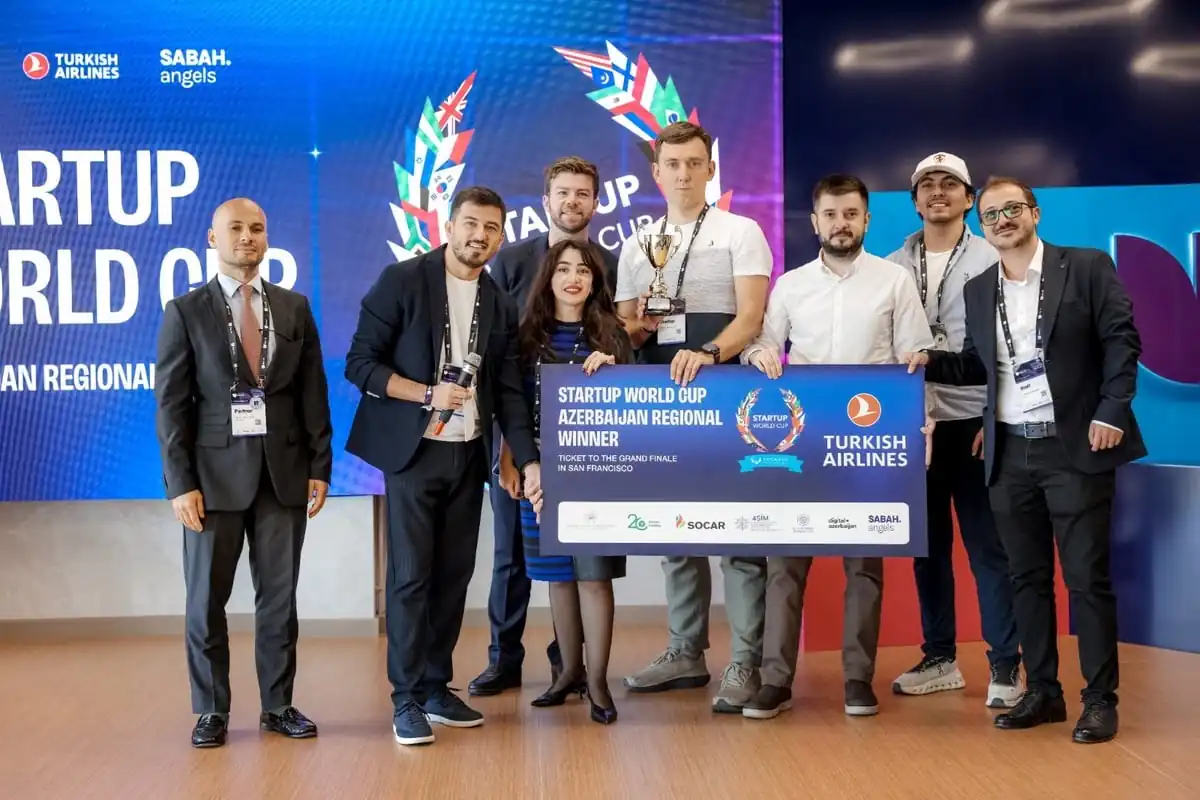
Kazakhstan-founded 4sell.ai won the regional competition, securing a place in the Startup World Cup Grand Finale scheduled for November 6 in San Francisco. The Azerbaijan regional event was organized by SABAH. Angels, with Turkish Airlines serving as its official travel partner.
Hosting an international competition alongside the broader festival fits Baku ID’s positioning as a bridge between startup markets. Its official materials describe the event as an investment and innovation platform connecting the Caucasus, Central Asia and MENA.
NEXUS Awards Recognize Startups and Investors
The second day also included the NEXUS Awards, which recognize startups, investors and other participants in the wider regional innovation ecosystem.
Organizers said 80 startups competed across 15 categories in 2026, while public voting generated more than 100,000 votes. Twelve startups ultimately received awards.
Among the announced winners, Forg3t Protocol received the AI Startup of the Year award. Ayan Capital and Papercut were recognized in the FinTech Startup of the Year category, Wellbees in Health and Wellness, Jusoor Labs in EdTech, and Fuelin in Mobility & Logistics. Middle East Venture Partners was named Venture Capital Fund of the Year, while Founder One co-founder and partner Sina Afra received a Special Recognition Award.
The awards have also expanded geographically. Baku ID’s official NEXUS materials describe the program as covering Central and Eastern Europe, the Caucasus, Central Asia and MENAPT markets. The 2025 edition drew more than 800 nominations from over 20 countries and approximately 7,000 public votes, according to the organizers.
AI, Energy and Digital Development Shape Discussions
Beyond the competitions, Baku ID’s programming addressed how technology companies in emerging markets can develop talent, secure investment and reach international customers.
Artificial intelligence, energy technology, education and digital transformation were among the subjects discussed during the two-day event. Founders also addressed challenges associated with international expansion, including commercialization, investor access and business-model development.
The festival attracted international speakers including Middle East Venture Partners co-founder and CEO Walid Mansour; Founder One co-founder and partner Sina Afra; Astana Hub Managing Director Tanat Uskembayev; and Ukraine Phoenix Tech Fund co-founder and managing partner Dominique Piotet.
The public-sector component extended beyond the conference stage. Azerbaijan’s Innovation and Digital Development Agency organized an ecosystem meeting alongside Baku ID involving representatives of nearly 20 technology companies and startups. Discussions covered the country’s 2026–2028 digital-development action plan and initiatives intended to support innovation and digital skills.
A separate session brought public- and private-sector leaders together to discuss skills needed in the labor market as technologies associated with the Fourth Industrial Revolution develop.
SABAH.HUB Signs Cooperation Agreement With AI Startup Factory
Baku ID also produced a new institutional partnership.
SABAH.HUB, SABAH. Fund and Türkiye’s AI Startup Factory signed a memorandum of cooperation during the festival. According to the organizers, the agreement is intended to support startup development and expand investment cooperation.
The agreement adds a cross-border component to a festival already seeking to connect several neighboring startup ecosystems rather than focusing exclusively on Azerbaijan.
That regional strategy is reflected in Baku ID’s previous activity. The event’s official website says earlier editions have collectively attracted 13,500 participants and 375 startups, with $5.5 million in investment commitments. These are organizer-reported figures.
Baku ID Expands Azerbaijan’s Regional Startup Connections
The 2026 edition took place against Azerbaijan’s broader efforts to develop technology skills, digital infrastructure and links between government, established companies and startups.
Baku ID’s strategic partners this year included Azerbaijan’s Ministry of Science and Education, PASHA Holding, SOCAR and the Center for Analysis and Coordination of the Fourth Industrial Revolution under the Ministry of Economy. The Innovation and Digital Development Agency and TIMES were listed as main partners.
The combination of a multinational startup competition, investor participation and government involvement gives Baku ID a role beyond a conventional technology conference. Its developing proposition is to connect entrepreneurs from emerging innovation markets with capital, commercial partners and international networks.
For Azerbaijan, that also creates an opportunity to position Baku as a meeting point between startup communities that can otherwise be fragmented across the Caucasus, Central Asia, Türkiye and the Middle East.
Related Stories

Baselayer Raises $35M Series A to Build Identity Infrastructure for AI Agents

Steadily Builds Digital Insurance Platform Around America’s Landlords

How Palmer Luckey Took a Silicon Valley Playbook Into the Defense Industry