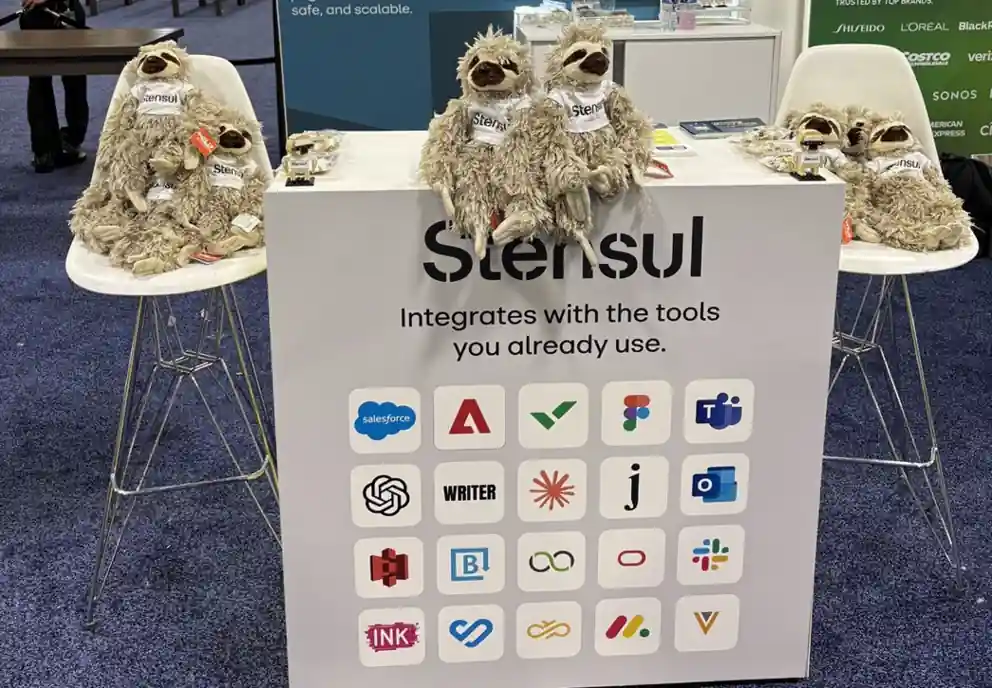
The New York-based Stensul is developing a collaborative platform that helps enterprise marketing teams create emails, landing pages and other digital content while maintaining brand consistency and operational control.
Stensul, a New York-based marketing technology company founded by entrepreneur Noah Dinkin, is expanding its approach to enterprise content creation through artificial intelligence, no-code tools and collaborative workflows. The company has raised $57.5 million in disclosed funding and built a platform designed to reduce the time businesses spend producing marketing emails, landing pages and related digital assets.
Founded in 2014, Stensul operates at the intersection of marketing technology, workflow automation and enterprise software. Its development reflects growing demand for systems that help large organisations produce more digital content without sacrificing brand standards, compliance or oversight.
How Noah Dinkin Identified a Bottleneck in Enterprise Marketing
Stensul’s origins can be traced to the operational challenges of creating marketing emails for large organisations.
Before founding Stensul, Noah Dinkin established FanBridge, a business focused on helping brands and creators communicate with their audiences. Stensul subsequently emerged from the experience of producing email campaigns within that business.
The founders and early team observed that enterprise email production frequently involved several departments, including marketing, design, development and compliance. Campaigns moved through repeated revisions and approvals before reaching customers.
In one example described by the company, producing a weekly marketing email could take five days and involve more than 100 changes. Stensul said an early version of its technology reduced that production process to approximately 15 minutes. The example illustrates the company’s original product thesis, although it should not be interpreted as a universal performance benchmark.
Rather than developing another email delivery service, Dinkin focused on the production process that occurs before a campaign enters an email marketing platform.
That distinction became central to Stensul’s business model. Its software is designed to help marketing teams create and approve content, while integrating with established systems responsible for distributing campaigns and managing customer relationships.
Stensul’s No-Code Platform for Enterprise Marketing Teams
Stensul provides a centralised environment for creating marketing emails and landing pages without requiring every participant to write code.
Its platform combines content editing, collaboration, reusable components and predefined brand controls. This allows marketers to contribute directly to content production while reducing dependence on specialised designers and developers for routine changes.
For larger organisations, the value of such systems extends beyond individual campaign creation. Marketing departments often operate across different countries, business units and product lines, each with its own approval requirements and brand standards.
Stensul addresses this complexity through a framework it calls Governed Creation, which combines no-code production with shared rules and collaborative review processes.
According to the company’s official corporate overview, the framework is intended to support distributed content creation while preserving consistency and oversight.
The approach also differentiates Stensul from traditional email marketing platforms. Rather than replacing the infrastructure businesses already use for campaign delivery, Stensul focuses on making content production more efficient before distribution.
The company has highlighted integrations with established marketing technology providers, including Salesforce Marketing Cloud, Adobe Marketing Cloud and Oracle Marketing Cloud.
These connections allow enterprise customers to incorporate Stensul into existing technology environments instead of rebuilding their entire marketing operations.
Stensul’s $57.5 Million Funding History
Stensul has attracted venture capital investment across several financing rounds.
In June 2018, the company announced a $7 million Series A round led by Javelin Venture Partners, with participation from Arthur Ventures, First Round Capital, Uncork Capital and Lowercase Capital.
The financing supported the company’s efforts to expand its workforce and develop its enterprise email creation technology.
In November 2020, Stensul secured a $16 million Series B round led by U.S. Venture Partners. The investment included participation from Capital One Ventures, Peak State Ventures and existing investors.
The company subsequently announced a $34.5 million Series C financing in November 2023, led by Sageview Capital. Existing investors participated alongside Edith Harbaugh, the executive chair and co-founder of LaunchDarkly.
The Series C brought Stensul’s disclosed cumulative financing to approximately $57.5 million.
STENSUL — DISCLOSED FINANCING MILESTONES
| June 2018 | Series A | $7M |
| November 2020 | Series B | $16M |
| November 2023 | Series C | $34.5M |
Stensul said the 2023 investment would support product development, particularly its artificial intelligence capabilities, and accelerate adoption among enterprise customers.
The financing also reflected the company’s expansion from email creation into a broader marketing content production platform.
Artificial Intelligence Becomes Central to Stensul’s Product Strategy
The integration of generative artificial intelligence has become an important part of Stensul’s development.
The company initially introduced AI-powered features for tasks including subject-line generation, preheader text, content titles, calls to action and adjustments to writing style.
These capabilities were intended to help marketers generate and refine content without moving between separate writing tools and campaign production systems.
Stensul has since positioned AI within its broader Governed Creation framework.
The distinction is significant for enterprise customers. Although generative AI can accelerate content production, businesses must still manage brand accuracy, legal requirements, internal approvals and the risk of inconsistent messaging.
Stensul’s approach places AI-generated content within predefined workflows and brand controls rather than treating automated generation as a replacement for human review.
The company describes its longer-term direction as an evolution towards intelligent, governed workflows that could support content production across additional marketing channels.
However, the extent to which AI improves efficiency depends on how individual organisations configure and use the platform. Company-reported productivity improvements should therefore be distinguished from independently established results.
Enterprise Customers and International Operations
Stensul has built its business around the needs of larger marketing organisations.
Its publicly identified customers include Cisco, BlackRock and Equifax, companies operating in industries where brand consistency, approval processes and regulatory considerations can be especially important.
In a 2023 interview republished by Stensul, Dinkin described the company’s expansion beyond email creation into broader marketing workflows. The company also reported that Cisco had substantially reduced campaign production time using its platform. Those performance figures remain customer-specific claims rather than evidence of identical results across all users.
Stensul’s corporate website reports more than 160 employees and two offices, located in New York City and Buenos Aires.
The international structure gives the company an operational presence in both North and South America while serving enterprise customers with distributed marketing teams.
Stensul also identifies SOC 2 compliance and recognition in enterprise software rankings among its credentials. Such indicators can be relevant to procurement decisions, although security certifications and customer satisfaction ratings should be evaluated within their specific scope.
The Opportunity for Governed AI in Enterprise Marketing
Stensul operates in a competitive market that includes marketing automation providers, content management systems, design collaboration tools and increasingly AI-native content creation platforms.
Its commercial opportunity is based on the complexity of enterprise marketing operations.
For large businesses, creating a single marketing asset may require contributions from copywriters, designers, developers, legal reviewers and regional marketing teams. Delays at any stage can affect campaign schedules and increase production costs.
Stensul’s platform seeks to reduce these coordination problems by giving teams a common environment for content production and approval.
The company’s emphasis on governance also reflects an emerging challenge for businesses adopting generative AI: producing more content is not necessarily valuable if organisations cannot maintain accuracy, brand consistency and appropriate oversight.
Stensul’s ability to differentiate itself will depend on how effectively it combines content creation, workflow management and AI capabilities with the existing systems enterprises already rely upon.
What’s Next for Stensul?
Stensul’s stated product direction points towards a broader role in enterprise content operations.
The company intends to develop governed workflows that support more marketing channels while increasing the use of AI in content creation and execution.
Its existing enterprise relationships, disclosed venture funding and international workforce provide a foundation for pursuing that strategy.
Nevertheless, the company’s future growth will depend on enterprise adoption, competitive differentiation and its ability to demonstrate measurable operational value as AI content creation becomes more widely available.
For founder Noah Dinkin, Stensul’s development represents a progression from solving a specific email production problem to addressing how large organisations coordinate marketing content creation.
The broader significance lies in the company’s emphasis on governance as a necessary counterpart to automation. As businesses generate more content with AI, systems that manage how that content is created, reviewed and approved may become increasingly important to enterprise marketing operations.
Related Stories

Elorian Unveils Glimpse After Raising $55 Million for Visual AI Development
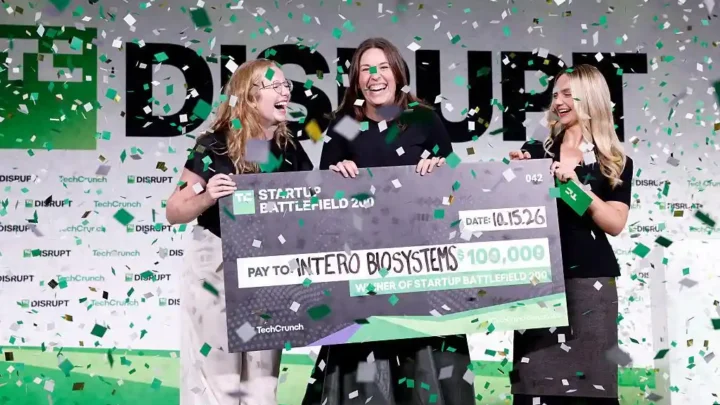
Intero Biosystems Wins TechCrunch Disrupt 2026 Startup Battlefield and $100,000 Prize
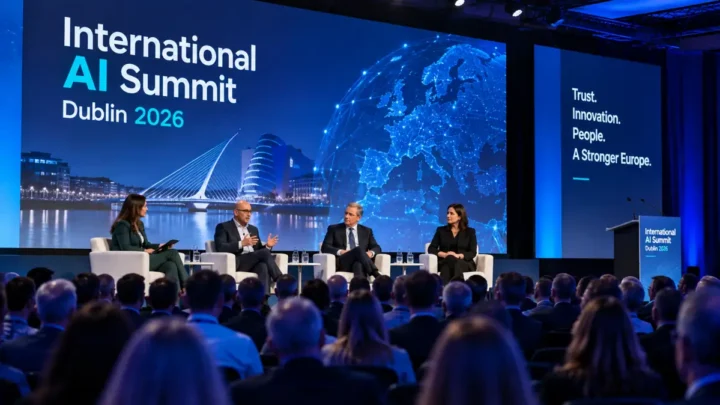
Dublin International AI Summit 2026 Hosts Global Leaders to Address AI Innovation, Safety and Regulation