
Meet Navya Tuteja, the Teen Founder Behind AI Job Search Platform Raaha
Virginia high school senior Navya Tuteja built Raaha after seeing how invisible disabilities can shape people’s experiences at work. The free AI-powered platform now helps job seekers evaluate whether a role fits how they actually work.

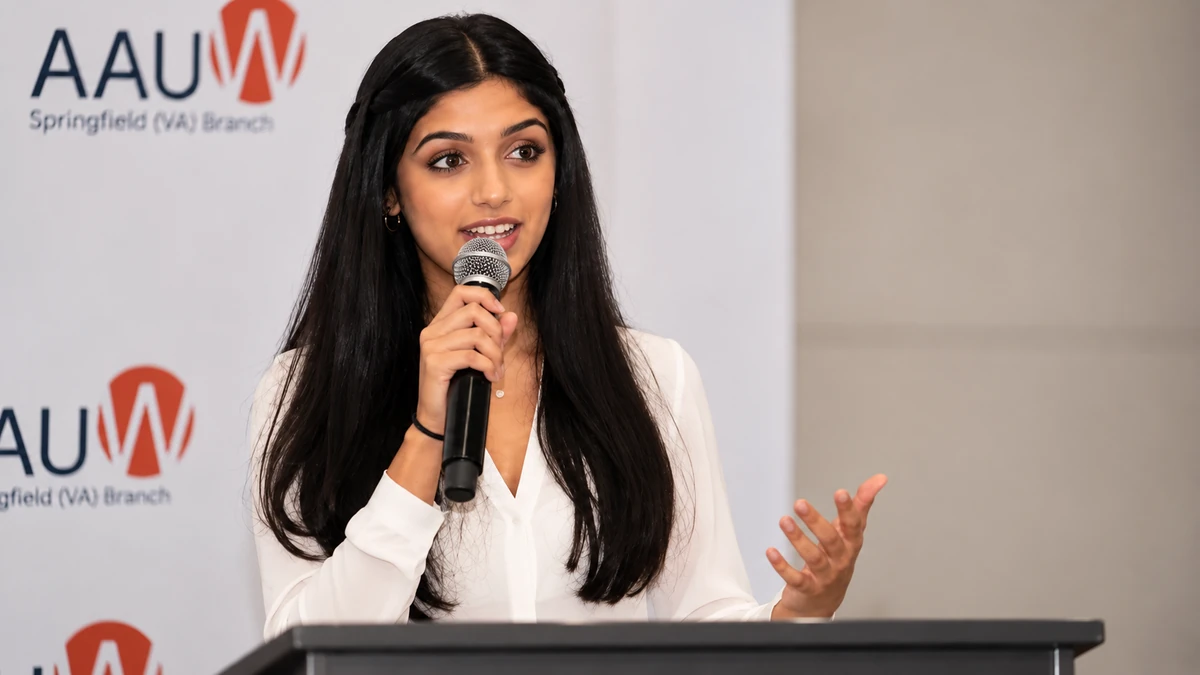
At 17, Navya Tuteja is confronting a problem that established recruitment platforms have often left to job seekers to solve themselves: whether a workplace will actually suit the way a person thinks, communicates and works.
The Virginia high school senior is the founder of Raaha, a free AI-powered platform designed initially with neurodivergent job seekers in mind. Users can compare a job description with their working preferences across factors including schedule predictability, task structure, communication style and work environment.
Tuteja launched the platform this summer. By early August, more than 200 people had used it. Less than two months later, Fortune reported that Raaha had surpassed 1,000 users and included 20,000 job listings, marking rapid early adoption for a product its teenage founder bootstrapped herself.
Behind those numbers is a founder story shaped less by an interest in AI itself than by a problem Tuteja had watched for years.
Her Mother’s Experience Inspired the Idea for Raaha
Tuteja’s motivation began at home.
Her mother is hard of hearing, and Tuteja said that as she grew older, she became more aware of the difficulties her mother encountered obtaining workplace accommodations for a disability that other people could not readily see. She later observed similar issues among students whose different ways of thinking were sometimes interpreted as a lack of capability rather than a need for different support.
That experience led Tuteja toward neurodiversity advocacy and eventually toward a specific weakness she saw in the job-search process.
Job listings typically provide information such as responsibilities, qualifications, salary, location and benefits. They are often much less explicit about what everyday work will feel like: whether priorities frequently change, communication is predominantly written or verbal, schedules are predictable, tasks are highly structured or the environment requires extensive multitasking.
For neurodivergent candidates, those details can materially affect whether a role is sustainable.
Tuteja decided to make that missing information the product.
“Raaha,” which she has described as meaning “path” in Hindi, asks users about how they prefer to work and analyzes job descriptions against those preferences.
Raaha Evaluates the Job, Not the Applicant
That distinction is central to Tuteja’s approach.
Traditional recruiting technology frequently evaluates whether a candidate matches an employer’s requirements. Raaha reverses the direction: it evaluates the characteristics of the job for the candidate.
The platform’s current website says it examines areas including schedule predictability, task structure, multitasking load, work pace, communication style, work environment, and flexibility and change. Users complete a work-profile questionnaire and paste in a job description before receiving a fit analysis.
Raaha says its objective is to identify what appears compatible with the user’s preferences, what may present difficulties and what the job posting does not explain.
The product is explicitly positioned as decision support rather than an assessment of an individual’s capabilities. Its website summarizes the principle as evaluating “job structures, not people.”
Earlier reporting provides more detail about the technology behind the product. WTOP reported in August that job information was processed using Anthropic’s Claude, with a prompt Tuteja developed with input from neurodiversity specialists.